Orthopedic Surgery
-
Regain your mobility without delay.
At our Praxis Clinic network, we are proud to offer private orthopedic surgery services, helping our patients return to their daily activities quickly and regain optimal quality of life.
Affordable and subscription-free
Open on Saturdays
24/7 call center
1 (833) 312-5050
Quick appointments and follow-ups
Type of surgery offered:
HIP SURGERY
The hip is a crucial joint for walking, sitting, standing, and performing daily activities. When the hip becomes painful or stiff, hip surgery may be necessary.
Praxis Clinic provides comprehensive and personalized support for all hip surgeries : total hip replacement, bilateral hip replacement, or hip bursectomy. Our goal is to relieve pain, restore mobility, and help patients return to an active life. Our orthopedic surgeons guide you through every step and select the procedure best suited to your condition.
HIP ANATOMY AND JOINT DEGENERATION
The hip connects the femur (thigh bone) to the pelvis. It consists of the femoral head, which fits into a cavity in the pelvis called the acetabulum, and is covered with articular cartilage that ensures smooth, friction-free movement. Surrounding the joint are ligaments, muscles, and bursae, small fluid-filled sacs that reduce friction.
When the cartilage gradually wears down, it is called joint degeneration, which can cause pain and stiffness.
This condition typically presents with several characteristic symptoms:- Pain in the groin, buttock, or thigh
- Stiffness and limited range of motion
- Difficulty walking, climbing stairs, or squatting
- Limping or discomfort at rest
OUR SURGICAL PROCEDURES
- Total hip replacement: Surgery to replace the hip with an artificial prosthesis, usually indicated for severe osteoarthritis or avascular necrosis. This procedure aims to reduce pain, improve mobility, and enable a return to functional activities.
- Bilateral total hip replacement: Surgery to replace both hips with artificial prostheses, typically recommended for severe bilateral osteoarthritis or avascular necrosis. It provides balanced mobility, improved posture, reduced bilateral pain, and allows rehabilitation to be concentrated in a single period.
- Hip bursectomy: Hip bursectomy involves removing the bursa (small fluid-filled sac) around the joint, usually indicated for persistent bursitis despite conservative treatment. It provides lasting pain relief, a gradual return to daily and sports activities, and is often performed arthroscopically to minimize invasiveness.
CARE PROCESS AT PRAXIS CLINIC
Before surgery:- Comprehensive consultation and evaluation
- Preoperative tests (blood work, X-rays, MRI if needed)
- Discussion of prosthesis type and surgical protocol
- Advice on physical and nutritional preparation
- Hospitalization: 2 to 5 days depending on the procedure
- Personalized rehabilitation program
- Regular follow-ups with control X-rays
- Practical guidance for movements and daily life
FAQ – HIP SURGERY
For patients experiencing chronic pain and persistent mobility limitations despite conservative treatment.
The cost varies depending on the type of procedure, the chosen prosthesis, and the length of hospitalization. It is specified during the preoperative consultation.
- Bursectomy: a few weeks
- Total or bilateral hip replacement: several months, depending on rehabilitation
Often as early as the first or second postoperative day, with assistance.
Generally, 2 to 5 days, depending on the procedure and the patient’s condition.
Extreme movements or forced rotations should be avoided initially. Light activities and adapted sports are possible after rehabilitation.
Modern prostheses, including dual-mobility and customized implants, provide increased stability and maximum range of motion.
On average, 6 to 12 weeks to regain full functional independence, depending on age and physical condition.
KNEE SURGERY
The knee is a crucial joint for walking, running, squatting, and performing daily activities. When the knee becomes painful, stiff, or unstable, knee surgery may be necessary.
Praxis Clinic provides comprehensive and personalized support for all knee surgeries: arthroscopy with partial meniscectomy, total knee replacement, or bilateral total knee replacement. Our goal is to relieve pain, restore mobility, and help patients return to an active life. Our orthopedic surgeons guide you through every step and select the procedure best suited to your condition.
KNEE ANATOMY AND JOINT DEGENERATION
The knee connects the femur (thigh bone) to the tibia (shin bone) and includes the patella at the front to protect the joint. It is composed of articular cartilage, menisci (two crescent-shaped cartilage cushions), ligaments that ensure stability, and tendons and muscles that enable movement.
When the cartilage or menisci wear out or tear, it is called joint degeneration or a meniscal injury, causing pain, stiffness, and limited movement.
This condition typically presents with several characteristic symptoms:
Knee pain, especially when walking or climbing stairs
Stiffness and limited range of motion
Swelling or a feeling of locking
Difficulty squatting or rising from a chair
This condition may be caused by osteoarthritis, meniscal tears, trauma, previous fractures, or inflammatory diseases.
OUR SURGICAL PROCEDURES
- Knee arthroscopy + partial meniscectomy: A procedure aimed at repairing or removing the damaged portion of the meniscus to relieve pain and improve joint function.
This procedure aims to reduce pain, restore mobility, and allow a quick return to daily and sports activities. - Total knee replacement: Surgery to replace the knee joint with an artificial prosthesis, usually indicated in cases of advanced osteoarthritis or joint degeneration.
It provides lasting pain relief, improves mobility, and supports gradual resumption of functional activities. - Bilateral total knee replacement: Surgery to replace both knees with artificial prostheses, usually indicated in cases of advanced bilateral osteoarthritis or joint degeneration.
This procedure offers balanced mobility, improved posture, reduced bilateral pain, and rehabilitation concentrated into a single period.
CARE PROCESS AT PRAXIS CLINIC
Before surgery:
- Comprehensive consultation and evaluation
- Preoperative tests (blood work, X-rays, MRI if necessary)
- Discussion of the type of prosthesis or meniscus repair and surgical protocol
- Advice on physical and nutritional preparation
After surgery:
- Hospitalization: 1 to 5 days depending on the procedure
- Personalized rehabilitation program
- Regular follow-ups with control X-rays
- Practical guidance for movements and daily life
FAQ – KNEE SURGERY
Knee surgeries are indicated for patients whose persistent pain, stiffness, or instability does not improve with conservative treatments (physical therapy, medications, injections). Typical candidates include:
- Advanced osteoarthritis or joint degeneration
- Persistent or irreparable meniscal tears
- Chronic pain limiting daily activities
- Instability or locking of the joint
The cost varies depending on:
- The type of prosthesis chosen (standard, custom, dual-mobility)
- The number of knees operated on (unilateral or bilateral)
- The length of hospitalization and the complexity of the surgery
The exact price is provided during the preoperative consultation after assessing your condition and specific needs.
- Arthroscopy + partial meniscectomy: generally 2 to 6 weeks, depending on age and physical activity.
- Total knee replacement: approximately 6 to 12 weeks to regain functional independence, with gradual rehabilitation.
- Bilateral replacement: may require 8 to 16 weeks, due to simultaneous recovery of both knees.
- Arthroscopy / meniscectomy: often the same day or the next day, with gradual weight-bearing as tolerated.
- Total / bilateral knee replacement: from the first or second postoperative day, using a walker or crutches. Walking gradually becomes independent with rehabilitation.
- Arthroscopy: usually 1 to 2 days or as outpatient surgery.
- Total knee replacement: 3 to 5 days on average, depending on the patient’s overall condition.
- Bilateral knee replacement: often 4 to 7 days, to ensure proper monitoring and the start of safe rehabilitation.
- Avoid extreme or high-impact movements during the initial rehabilitation period.
- High-impact sports (running, jumping, football) are not recommended before 3 to 6 months, depending on the surgery and recovery.
- Walking, cycling on flat terrain, and swimming are encouraged from the start of rehabilitation.
The latest advancements include:
- Customized prostheses (size and shape tailored to the patient’s anatomy)
- Rotating-stabilized prostheses to improve flexion and stability
- Minimally invasive and arthroscopic techniques to reduce pain and speed up recovery
These innovations provide better mobility, increased implant durability, and faster recovery.
- Arthroscopy + meniscectomy: generally 2 to 6 weeks
- Total knee replacement: approximately 6 to 12 weeks to regain full functional independence
- Bilateral knee replacement: 8 to 16 weeks, varying according to age, physical condition, and patient motivation
Rehabilitation includes muscle strengthening, and learning daily movements to restore mobility and stability.
SHOULDER SURGERY
The shoulder is a complex and essential joint for raising the arm, grasping objects, throwing or carrying, and performing daily activities. When the shoulder becomes painful, stiff, or unstable, shoulder surgery may be necessary.
Praxis Clinic provides comprehensive and personalized support for all shoulder surgeries: total shoulder replacement, arthroscopy with rotator cuff repair, or arthroscopy with labrum (Bankart) repair. Our goal is to relieve pain, restore mobility, and help patients return to an active life. Our orthopedic surgeons guide you through every step and select the procedure best suited to your condition.
SHOULDER ANATOMY AND JOINT DEGENERATION
The shoulder connects the humerus (arm bone) to the glenoid cavity of the scapula. It consists of the humeral head, which fits into the glenoid, and is covered with articular cartilage that allows smooth movement. The joint is surrounded by ligaments, tendons, and muscles, including the rotator cuff, and bursae that reduce friction.
When the cartilage or tendons wear out or tear, it is called joint degeneration or rotator cuff/labrum injury, causing pain, stiffness, and limited movement.
This condition may present with several characteristic symptoms:
- Shoulder pain, especially at night or during overhead movements
- Stiffness and limited range of motion
- Instability or a feeling of dislocation
- Difficulty carrying or lifting objects
The main causes include osteoarthritis, rotator cuff tears, labrum injuries, trauma, or inflammatory diseases.
OUR SURGICAL PROCEDURES
- Total shoulder replacement: Surgery to replace damaged joint surfaces with a prosthesis, often indicated in cases of advanced osteoarthritis. It relieves pain, restores mobility, and allows return to functional activities.
- Shoulder arthroscopy with rotator cuff repair: Procedure to repair torn tendons to reduce pain and restore joint function. Performed arthroscopically, it minimizes invasiveness and speeds up recovery.
- Shoulder arthroscopy with labrum repair (Bankart): Arthroscopic repair of the anterior or posterior labrum, often necessary after shoulder dislocation or instability. It stabilizes the joint and prevents recurrence.
CARE PROCESS AT PRAXIS CLINIC
Before surgery:
- Comprehensive consultation and evaluation
- Preoperative tests (blood work, X-rays, MRI if needed)
- Discussion of the type of prosthesis or repair and surgical protocol
- Advice on physical and nutritional preparation
After surgery:
- Hospitalization: 1 to 5 days depending on the procedure
- Personalized rehabilitation program
- Regular follow-up with X-rays or MRI
- Practical guidance for movements and daily life
FAQ – SHOULDER SURGERY
For patients experiencing persistent pain, limited mobility, instability, or recurrent dislocations despite conservative treatments.
- Arthroscopy (rotator cuff or labrum): generally 4 to 8 weeks
- Total shoulder replacement: approximately 8 to 12 weeks to regain full function
- Arthroscopy: gradual mobilization starting the next day, according to the surgeon’s recommendations
- Prosthesis: passive movements and guided exercises in the days following surgery, more active use after a few weeks
- Arthroscopy: often 1 to 2 days
- Total prosthesis: 2 to 4 days depending on the patient’s condition
- Avoid sudden movements or lifting heavy loads during the first few weeks
- Contact sports or extreme movements are restricted until cleared by the surgeon
- Arthroscopy: 4 to 8 weeks depending on the procedure and muscle recovery
- Total prosthesis: 8 to 12 weeks, with guided exercises to restore range of motion, strength, and full function
No request or reference needed.
WRIST AND HAND SURGERY
The wrist and hand are essential joints and structures for grasping, writing, manipulating objects, and performing daily activities. When the wrist or fingers become painful, stiff, or locked, wrist or hand surgery may be necessary.
Praxis Clinic provides comprehensive and personalized support for all wrist and hand surgeries: carpal tunnel release and trigger finger release (tenoligamentous). Our goal is to relieve pain, restore mobility, and enable a rapid return to functional activities. Our orthopedic surgeons specializing in hand surgery guide you through every step and select the procedure best suited to your condition.
WRIST AND HAND ANATOMY AND ASSOCIATED CONDITIONS
The wrist connects the forearm to the hand and is composed of eight small bones forming two rows of joints. It is surrounded by ligaments that stabilize the joint, flexor and extensor tendons that allow finger movement, and nerves such as the median nerve, responsible for sensation and motor function in the fingers.
Common conditions include nerve compression in the carpal tunnel and trigger finger, causing pain, locking, and limited movement. These conditions typically present with:
- Pain or numbness in the hand or fingers
- Finger locking or a “catching” sensation during flexion/extension
- Weakness or difficulty grasping objects
- Stiffness or limited range of motion
OUR SURGICAL PROCEDURES
- Carpal tunnel release: Procedure to relieve compression of the median nerve in the carpal tunnel. It helps reduce pain and numbness, restore function, and prevent symptom worsening. This surgery is generally minimally invasive. For more details, see our minor surgery page.
- Trigger finger release (tenoligamentous): Procedure to release a blocked flexor tendon, allowing smooth finger movement without locking or pain. It improves grip and comfort in daily activities.
CARE PROCESS AT PRAXIS CLINIC
Before surgery:
- Comprehensive consultation and evaluation
- Preoperative tests if necessary
- Discussion of the surgical technique and recovery protocol
- Advice on physical preparation and lifestyle adjustments
After surgery:
- Hospitalization: often outpatient or 1 day depending on the procedure
- Personalized rehabilitation program
- Regular follow-up to check healing and mobility
- Practical guidance for movements, daily life, and return to work
FAQ – WRIST AND HAND SURGERY
They are intended for patients experiencing persistent pain, numbness, or locking, particularly in cases of carpal tunnel syndrome or trigger finger, when conservative treatments have not been effective.
Recovery depends on the procedure: generally 2 to 6 weeks for trigger finger release and 4 to 8 weeks for carpal tunnel decompression, with a gradual return to activities.
Rehabilitation varies depending on the procedure and the severity of symptoms, generally lasting 4 to 8 weeks, and sometimes longer for complex or combined cases.
FOOT AND ANKLE SURGERY
The foot and ankle are essential for walking, running, jumping, and maintaining balance. When the foot or ankle becomes painful, stiff, or deformed, foot or ankle surgery may be necessary.
Clinique Praxis offers comprehensive and personalized support for all foot and ankle surgeries, including correction of hallux valgus and tendon repair (Achilles, etc.). Our goal is to relieve pain, restore mobility, and enable a return to daily and sporting activities. Our specialized orthopedic surgeons guide you through every step and choose the procedure best suited to your condition.
FOOT AND ANKLE ANATOMY AND ASSOCIATED CONDITIONS
The foot and ankle consist of several bones, including the talus, calcaneus, and metatarsals, connected by ligaments that provide stability and surrounded by tendons that allow movement and propulsion. The ankle connects the leg to the foot and bears body weight during walking and running.
Common conditions include:
- Hallux valgus: deviation of the big toe with a painful bunion.
- Tendon rupture or degeneration, particularly of the Achilles tendon.
These conditions often present with:
- Pain and inflammation in the big toe or tendon
- Difficulty walking or bearing weight on the foot
- Visible deformity of the big toe or foot
- Stiffness and limited range of motion
OUR SURGICAL PROCEDURES
- Hallux valgus correction: Surgical straightening of a bunion (big toe deviation) to reduce pain and improve foot alignment. This procedure restores foot function, reduces discomfort, and improves posture and walking.
- Tendon repair (Achilles, etc.): Surgery to repair a torn or damaged tendon, often needed after an acute injury or degeneration. It restores strength and mobility and helps prevent recurrence or complications.
CARE PROCESS AT CLINIQUE PRAXIS
Before surgery:
- Comprehensive consultation and evaluation
- Preoperative exams (X-rays, MRI if needed)
- Discussion of the surgical technique and recovery plan
- Advice on physical preparation and nutrition
After surgery:
- Hospitalization: often outpatient, or 1 to 3 days depending on the procedure
- Regular follow-up to monitor healing and mobility
- Practical advice on movement, returning to sports, and daily activities
FAQ – FOOT AND ANKLE SURGERY
These procedures are intended for patients experiencing persistent pain, numbness, or locking, particularly in cases of carpal tunnel syndrome or trigger finger, when conservative treatments have not been sufficient.
Costs vary depending on the procedure, the type of implant or technique used, and the length of hospital stay. A personalized estimate is provided during the preoperative consultation.
Recovery time depends on the procedure: generally 4 to 6 weeks for hallux valgus and 8 to 12 weeks for tendon repair. Full return to activities may take several months.
For hallux valgus, partial weight-bearing walking is often possible the next day or after a few days using a postoperative shoe. For tendon repair, walking may initially be limited according to the surgeon’s recommendations.
Most procedures are performed on an outpatient basis or require 1 to 3 days of hospitalization, depending on the complexity and technique used.
It is recommended to avoid high-impact sports or heavy loads on the foot until cleared by the surgeon. Daily activities can be adapted using protective measures or a postoperative shoe.
Minimally invasive or percutaneous surgery for hallux valgus, as well as tendon repairs assisted by arthroscopy or reinforced techniques, are currently the most advanced methods to reduce invasiveness and speed up recovery.
Rehabilitation varies depending on the procedure: generally 4 to 6 weeks for hallux valgus and 8 to 12 weeks for tendon repair, with progressive exercises to restore strength, mobility, and balance.
Meet our orthopedic surgeons

Dr Mina W. Morcos MD, MSc, FRCSC
Orthopedic Surgeon
Dr Mina W. Morcos MD, MSc, FRCSC
Orthopedic Surgeon
Dr. Morcos is an orthopedic surgeon specializing in complex hip and knee replacement surgery. He earned his medical degree from Laval University and completed his orthopedic training at McGill University, where he also obtained a Master’s in Experimental Sciences. He then pursued advanced postdoctoral training, including a prestigious fellowship at Western University, followed by two additional fellowships at the University of Toronto: one in complex hip and knee reconstruction in adults and another in trauma surgery.
An academic orthopedic surgeon, Dr. Morcos is also an Assistant Professor of Surgery at the University of Montreal. His clinical interests include rapid recovery, minimally invasive surgery, and robotic-assisted procedures. His expertise covers total hip and knee replacement, partial knee replacement, and patellofemoral joint replacement. Dr. Morcos offers prompt private consultations and surgical interventions in Montreal, serving patients from Quebec, across Canada, and internationally.
Hip surgery
Knee surgery
Wrist and hand surgery
Dr Maxime Gaudreault MD, MSc, FRCSC
Orthopedic Surgeon
Dr. Maxime Gaudreault is a board-certified orthopedic surgeon recognized for his rigorous, compassionate, and patient-centered approach. He earned his medical degree from the University of Montreal and completed his residency in orthopedic surgery at the same institution before beginning his practice in sports surgery, arthroplasty, and trauma care at the Montérégie-Ouest Integrated Health and Social Services Center.
Committed to comprehensive and integrated care, Dr. Gaudreault also completed training in ultrasound-guided injections, provided by physiatrists at the Institute of Physical Medicine. This clinical training at Hôpital Notre-Dame enables him to deliver precise treatments for musculoskeletal conditions, particularly in cases of joint, tendon, or inflammatory pain.
With several years of experience in both hospital and private practice settings, Dr. Gaudreault offers full expertise in the diagnosis, treatment, and surgery of musculoskeletal disorders, including sports injuries, joint disorders, complex fractures, and joint replacement surgeries. In his private practice, he focuses on accessibility, high-quality care, and building a trusting relationship with his patients. He collaborates closely with multidisciplinary healthcare professionals to provide prompt, personalized, and optimal care.
Hip surgery
Knee surgery
Shoulder surgery
Wrist and hand surgery
Foot and ankle surgery

Dr MaximeGaudreault MD, MSc, FRCSC
Orthopedic Surgeon
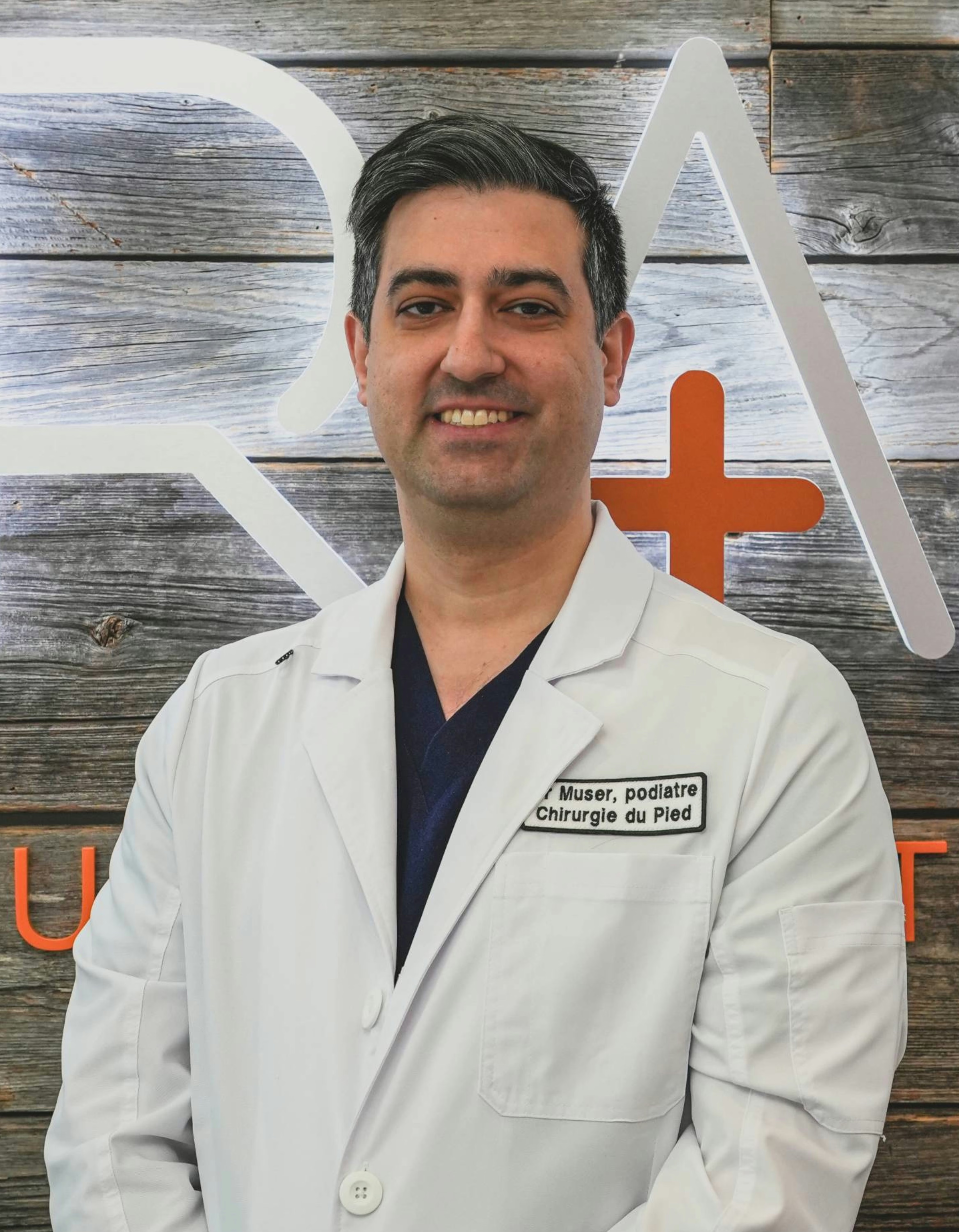
Dr Justin Muser MD
Dr Justin Muser MD
Orthopedic Surgeon
Dr. Justin Muser is a podiatrist and foot surgeon who joined the team after practicing in the United States. He immigrated to Quebec in 2024 with his wife, who is Québécoise. Prior to relocating, Dr. Muser practiced as an ABPM board-certified podiatrist and foot surgeon in Syracuse, New York, providing care in private clinics, hospitals, and surgical centers throughout the Upstate New York region.
Dr. Muser earned his Doctor of Podiatric Medicine (DPM) degree from the New York College of Podiatric Medicine, an affiliate of Touro University in New York City, in 2019. He then completed a three-year surgical residency at Guthrie Lourdes Hospital in Binghamton, New York (2019–2022), where he received advanced training and credentialing in reconstructive rearfoot and ankle surgery. During residency, he also completed a three-month internship at the Rubin Institute for Advanced Orthopedics in Baltimore, Maryland, gaining experience alongside internationally recognized orthopedic surgeons specializing in lower-extremity deformity correction.
Dr. Muser’s clinical interests focus on the diagnosis and treatment of foot deformities and biomechanical pathology. He specializes in correcting forefoot deformities, including hallux valgus, hallux rigidus, tailor’s bunions, hammertoes, and other toe contractures, using the latest surgical techniques and minimally invasive approaches. Above all, Dr. Muser is committed to delivering high-quality, compassionate care and achieving the best possible outcomes for his patients through both surgical and nonsurgical treatment options.
Foot and ankle surgery

Why choose private orthopedic surgery at Praxis?
Waiting too long before undergoing a procedure can lead to increased pain, loss of mobility, and a significant impact on quality of life. This waiting period can have major consequences:
- Loss of independence
- Decreased quality of life
- Impact on work, leisure, and family responsibilities
- Possible worsening of the orthopedic condition
At Praxis, we understand the urgency of relieving your pain and helping you regain mobility. Our network stands out for the notable expertise of our orthopedic surgeons and the use of state-of-the-art operating rooms, ensuring superior quality care. You can feel completely confident: our teams are attentive, compassionate, and committed to understanding your situation, providing safe, prompt, and personalized care.
A straightforward and compassionate care approach
At Praxis, we believe that no one should have to wait to regain their health and independence. With our private orthopedic surgery service, you can resume your activities, pain-free… and without delay.
Our team supports you from start to finish:
1
Prompt medical evaluation
2
3
Procedure scheduled within optimal timeframes
4
Praxis advantages

Our professionals
At Praxis, the right care by the right professional is at the heart of our commitment. Our team of private surgery experts ensures that you receive specialized care tailored to your needs. Through thorough evaluations and state-of-the-art treatments, we are dedicated to improving your health and comfort with high-quality surgical interventions.
Patient-centered
We prioritize your needs by providing attentive listening and personalized solutions to meet your expectations. Whether for a scheduled surgical procedure or post-operative follow-up, your comfort and well-being are at the core of our approach.
Excellence and quality of care
Our procedures adhere to the highest standards of safety and precision. We apply innovative techniques and proven expertise to ensure quality care and your satisfaction, while minimizing risks and recovery time.
Working together
Our team of professionals works closely together to provide comprehensive care and personalized follow-up. Each member of our team, whether surgeons, anesthetists, or medical staff, applies their expertise to support your recovery.
Transparency

Private clinic
Online appointment