Podiatry
- At Praxis Clinic, our podiatrists provide personalized care to effectively relieve pain, deformities, and other foot conditions, with the goal of improving your overall well-being.
- Available at our Terrebonne and downtown Montreal locations.
Affordable and subscription-free
Open on Saturdays
24/7 call center
1 (833) 312-5050
Quick appointments and follow-ups
What is podiatry?
Examples of conditions we can treat
Athlete’s foot
Flat feet
Plantar fasciitis
Bunion
Foot and Ankle Surgery
Our orthopedic surgeons guide you through a comprehensive care plan, from preoperative assessment to rehabilitation, to correct complex foot conditions and restore your stability.
Plantar warts
Hammer toe
Ingrown toenail
Fungal toenail infection
A fungal toenail infection is caused by a fungus that leads to yellowing, thickening, and deformation of the nail.
Corns and calluses
Corns and calluses are thickened areas of skin often caused by poorly fitting shoes or repeated friction.
Why see a podiatrist?
Seeing a podiatrist is essential to maintain the health of your feet and to effectively prevent or treat various problems. Our feet support our entire body weight and endure many pressures every day. A podiatrist is trained to diagnose and treat a wide range of conditions related to the feet and lower limbs.
Consulting a podiatrist means taking care of your foot health and preventing minor issues from becoming more serious. Don’t wait for the pain to persist—our podiatrists are here to help you regain comfort and mobility.
More information
The athlete’s foot, or tinea pedis, is a fungal infection that typically affects the skin between the toes. Symptoms include redness, blisters, cracked or peeling skin, and itching. The skin can also become moist, macerated, and emit an unpleasant odor.
This infection is caused by microscopic fungi that live on dead skin and nail tissue. It spreads easily in warm and humid environments, such as swimming pools, gyms, or public showers.
The main risk factors include:
- Feet frequently exposed to moisture (excessive sweating or closed shoes).
- Walking barefoot in moist public places.
- Poor foot hygiene or insufficient drying between toes after showering.
The primary treatment involves applying antifungal creams or gels prescribed by a podiatrist. These treatments should be combined with good hygiene practices, such as keeping feet clean and dry. In resistant cases, oral antifungals may be necessary, prescribed by a physician.
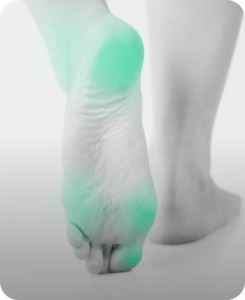
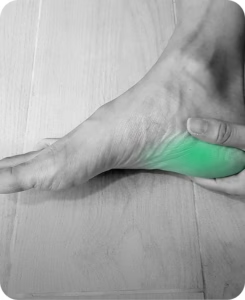
Flat foot is characterized by a collapse of the arch of the foot, causing the entire foot to touch the ground. This can lead to discomfort, especially when standing or walking.
It is often hereditary. In young children, it is normal for their feet to appear flat until about the age of 3, as their bone and muscle structure is still developing.
Flat feet increase the risk of pain in the feet, legs, knees, and even the spine, especially if the condition is not managed.
Treatments include custom-made orthotic insoles used to correct posture in children or relieve discomfort in adults. Muscle strengthening exercises and appropriate footwear are also recommended.
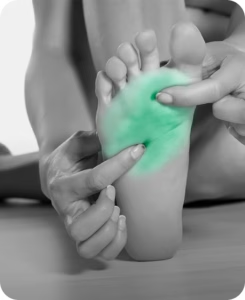
Plantar fasciitis is an inflammation of the plantar fascia, a fibrous membrane that connects the heel bone to the toes and supports the arch of the foot. This condition causes localized pain in the heel or the arch of the foot.
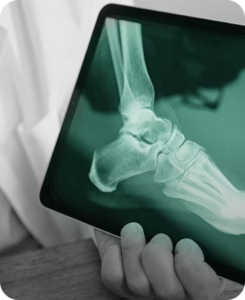
It can be caused by intense physical activity, excess weight, or imbalances in foot function. Stretching of the fascia leads to inflammation, sometimes accompanied by calcification visible on X-rays, known as a heel spur.
Symptoms include heel pain, a sensation of pinching or heat, and sometimes a prickling feeling under the foot, especially after periods of inactivity or prolonged standing.
Treatment involves custom orthotics, stretching exercises, ice application, or interventions such as cortisone injections. A podiatric evaluation is essential to determine the cause and tailor the treatment accordingly.
A bunion, or hallux valgus, is characterized by a bony deviation of the first metatarsal outward, accompanied by a displacement of the big toe toward the other toes. Over time, a calcium deposit can worsen the deformity.
Bunions are often hereditary, but tight or poorly fitting shoes can aggravate the condition. They are more common in women and can cause stiffness, joint pain, ingrown toenails, or difficulty wearing shoes.
Treatment includes custom orthotics to slow progression, exercises to maintain mobility, and sometimes anti-inflammatory medications or cortisone injections to reduce inflammation. In severe cases, surgery may be necessary.
Plantar warts are rough, often raised lesions that form on the sole of the foot as a result of an infection caused by the human papillomavirus (HPV). They usually appear where there is pressure or injury on the sole. These warts can be isolated or cluster together in a mosaic pattern.
Although benign, they can be painful and bothersome. They are also contagious, so early treatment is recommended to prevent spreading.
Treatments for plantar warts
Treatments for plantar warts vary depending on their size and resistance. Options include medicinal treatments, cryotherapy (liquid nitrogen), laser cauterization, or application of wart-removal acids. If these treatments fail, surgical removal may be considered.
Hammer toe is a deformity of the toes characterized by abnormal bending of the joints. This usually results from a muscle imbalance, often worsened by wearing poorly fitting shoes that force the toes to curl. Although this condition can be hereditary, it is frequently caused by tight footwear. This deformity can become painful, especially due to corns or irritations that develop.
Treatments for hammer toe
To relieve pain, it is important to wear shoes of the right size and shape. A podiatrist may prescribe custom-made orthotic insoles or digital orthoses to protect pressure points. If discomfort persists, surgical intervention may be considered to correct the deformity.
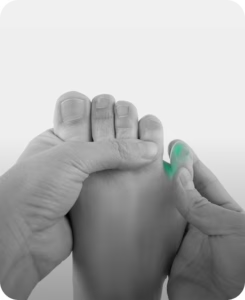
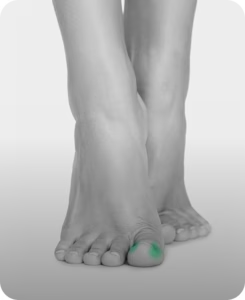
Ingrown toenail is a common condition where a corner of the nail, usually on the big toe, grows into the skin, causing painful inflammation. This condition can lead to infection if untreated, and in some cases, the infection may spread to surrounding tissues and even the bone. Common causes include excessive nail curvature, improper trimming, or a genetic predisposition.
Treatments for ingrown toenail
Treatment depends on the podiatrist’s diagnosis. In mild cases, simple cleaning and nail trimming may suffice. If necessary, a minor surgery under local anesthesia can be performed to remove part of the nail. To prevent this condition, it is recommended to cut nails straight, maintain good hygiene, and wear properly fitting shoes.
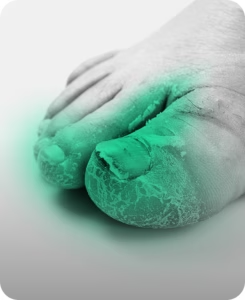
A fungal nail infection, or onychomycosis, occurs when a fungus infects the nail, causing it to yellow, thicken, and progressively deform. The infection develops slowly, damaging the nail over time. Although thickened or yellow nails are often associated with fungal infections, this is not always the case, as injuries or other conditions can cause similar symptoms. Therefore, an accurate diagnosis is necessary to differentiate fungal infections from other disorders.
Treatments for fungal nails
Treatment usually begins with mechanical debridement of the infected nail. In some cases, prescribed antifungal medications are necessary. For more severe infections, surgical removal of the infected nail may be required. If untreated, the infection can lead to ulcers and serious complications such as bacterial infections.
Corns and calluses are thickened areas of skin, often found on the feet, caused by repeated friction or pressure. Corns, which can be hard or soft, typically develop on toe joints, between the toes, or on the sole of the foot. Calluses, on the other hand, are more diffuse thickened areas that mainly appear under the forefoot or on the heel. These conditions are often caused by poorly fitting shoes, improper posture, or dry skin.
Treatments for corns and calluses
A podiatrist can safely treat corns and calluses using tools such as scissors, rotary burrs, or scalpels. To prevent and eliminate these issues, medicated ointments and recommendations on proper footwear may be prescribed. Assessing the mechanical function of the foot is also important to identify the underlying cause. It is not recommended to try removing these lesions yourself, and commercial chemical products should be avoided, especially for diabetic patients.
Custom foot orthotics are designed to correct biomechanical imbalances of the foot and improve overall body alignment. They help relieve various discomforts, such as pain in the feet, knees, or lower back, and are tailored to the specific needs of each patient, whether for postural correction, managing a chronic condition, or preventing injuries.
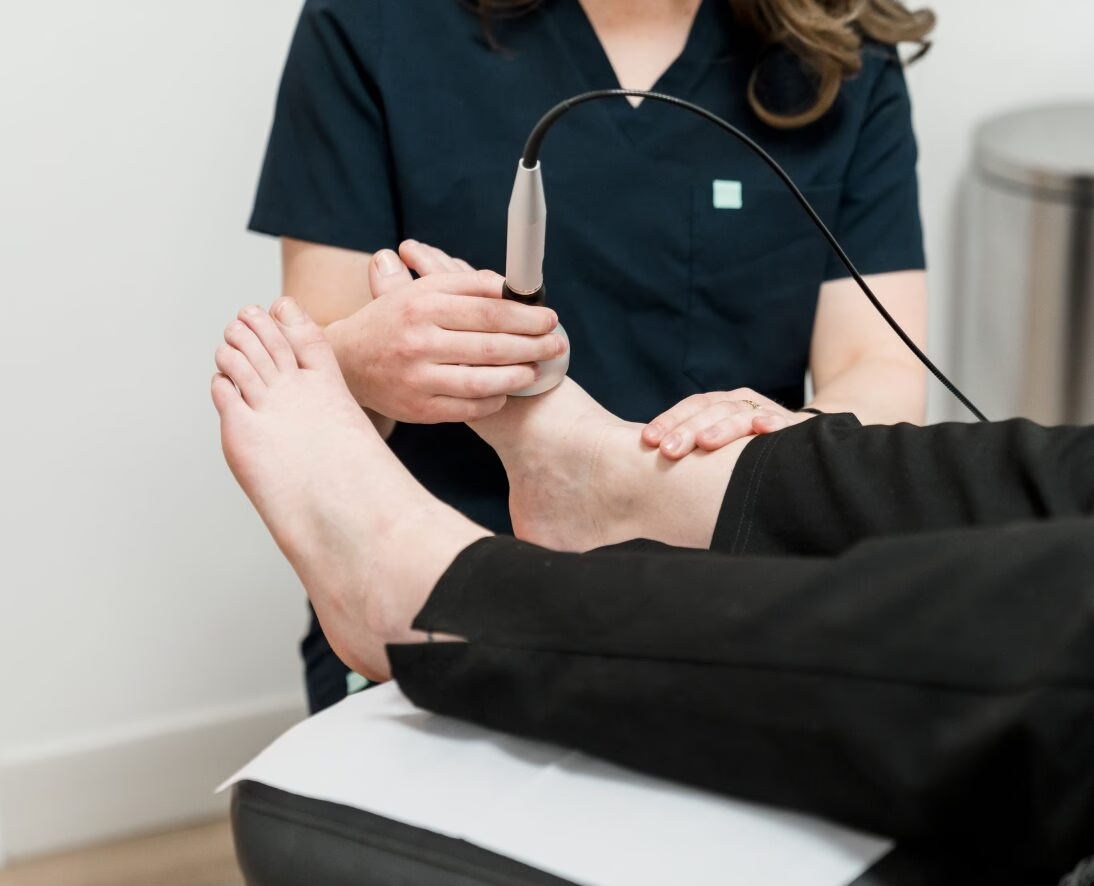
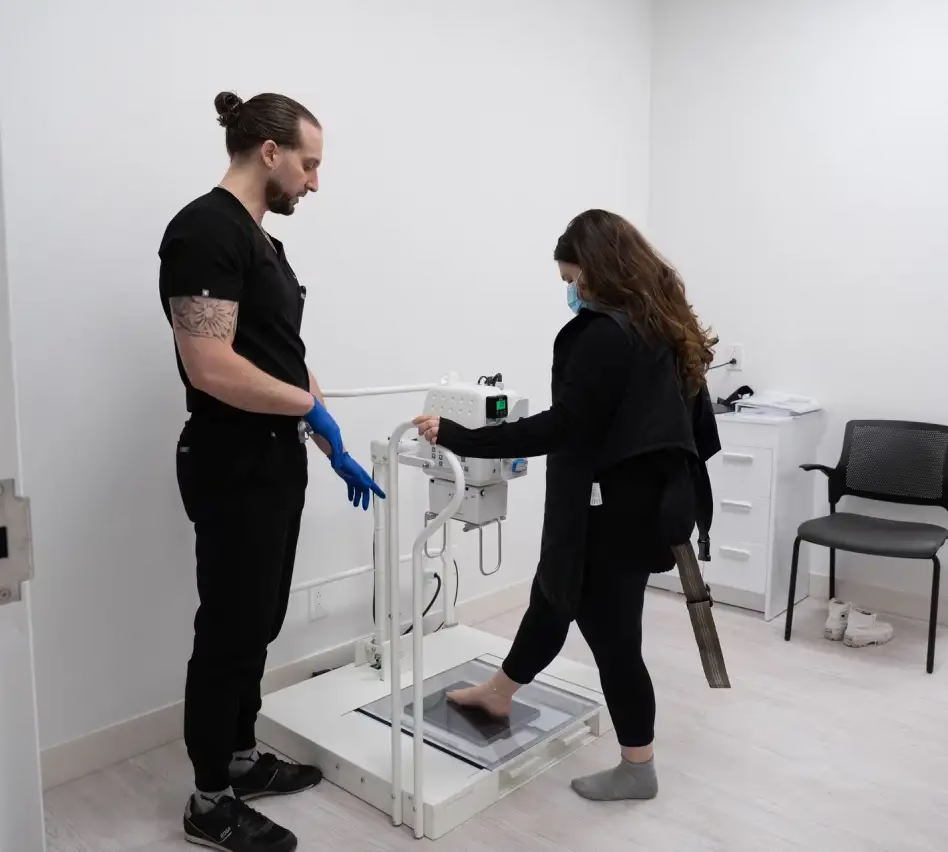
The biomechanical assessment is a thorough evaluation of the foot’s posture and movement to identify possible misalignments or dysfunctions. In addition, ultrasound provides a real-time analysis of internal structures, such as tendons and fascia, to establish an accurate diagnosis and guide treatments, especially in cases of chronic or inflammatory pain.
Certain foot conditions require surgical intervention to provide optimal relief. Our qualified podiatrists perform minor surgeries, such as the removal of ingrown toenails, cyst drainage, and treatment of toe deformities. These procedures, carried out under local anesthesia, allow for a quick recovery and a prompt return to daily activities.
To effectively treat inflammation and pain, cortisone or hyaluronic acid injections can be administered directly to the affected areas. Thanks to ultrasound guidance, these injections are precisely targeted to maximize their effectiveness and minimize discomfort. They are particularly recommended for plantar fasciitis, tendinitis, and joint pain in the foot.
Athletes, whether amateur or professional, put intense stress on their feet and can be prone to injuries such as sprains, tendinitis, or stress fractures. Sports podiatry aims to prevent and treat these injuries through thorough biomechanical analysis, tailored footwear recommendations, and, when necessary, custom orthotics. The goal is to optimize performance while reducing the risk of recurrence.
Regular foot care is essential to prevent discomfort and complications, especially for people with diabetes or circulatory issues. Our podiatric services include nail trimming and care, treatment of calluses, corns, and warts, as well as management of fungal infections like athlete’s foot and nail fungus. A preventive approach helps avoid complications and keeps your feet healthy.
Meet our podiatrist

Dr. Justin Muser, D.P.M.
Podiatrist & Foot Surgeon
Dr. Justin Muser, D.P.M.
Podiatrist & Foot Surgeon
Dr. Justin Muser is a podiatrist and foot surgeon who joined the team after practicing in the United States. He immigrated to Quebec in 2024 with his wife, who is Québécoise. Prior to relocating, Dr. Muser practiced as an ABPM board-certified podiatrist and foot surgeon in Syracuse, New York, providing care in private clinics, hospitals, and surgical centers throughout the Upstate New York region.
Dr. Muser earned his Doctor of Podiatric Medicine (DPM) degree from the New York College of Podiatric Medicine, an affiliate of Touro University in New York City, in 2019. He then completed a three-year surgical residency at Guthrie Lourdes Hospital in Binghamton, New York (2019–2022), where he received advanced training and credentialing in reconstructive rearfoot and ankle surgery. During residency, he also completed a three-month internship at the Rubin Institute for Advanced Orthopedics in Baltimore, Maryland, gaining experience alongside internationally recognized orthopedic surgeons specializing in lower-extremity deformity correction.
Dr. Muser’s clinical interests focus on the diagnosis and treatment of foot deformities and biomechanical pathology. He specializes in correcting forefoot deformities, including hallux valgus, hallux rigidus, tailor’s bunions, hammertoes, and other toe contractures, using the latest surgical techniques and minimally invasive approaches. Above all, Dr. Muser is committed to delivering high-quality, compassionate care and achieving the best possible outcomes for his patients through both surgical and nonsurgical treatment options.
Foot surgery
Deformity correction
Biomechanical disorders
Toe contractures
Hallux valgus
Hallux rigidus
Bunionette (Tailor’s bunion)
Hammer toes
Praxis advantages

Our team
At Praxis, THE RIGHT CARE BY THE RIGHT PODIATRIST is our priority. Our team of podiatrists, along with other healthcare professionals, work together to provide you with personalized, high-quality podiatry care. Discover how our podiatrists contribute to your well-being by taking care of your feet.
Here’s how we stand out:
Patient-centered
Excellence and quality of care
Our podiatrists practice with passion and rigor, ensuring high-quality care. We use advanced treatment techniques to address your conditions, applying best practices to guarantee effective and lasting relief.
Working together
Transparency
Open communication is essential. Our podiatrists clearly explain each step of your treatment, whether it involves preventing foot disorders or more specific procedures like minor surgery for corns and calluses. This approach helps us build a lasting relationship of trust.