 Specialists had predicted that we would have an active winter with heavy precipitation. Unfortunately for those who do not like the cold season, this year is packed with snowstorms!!! But snow means shoveling. For most people, shoveling is a chore, while for others, it is a moment to get some fresh air and be active. Contrary to popular belief, shoveling is indeed a physical activity. In this health capsule, you will find some tips and recommendations to help you avoid injury.

A significant number of people suffer heart attacks after a shoveling session — what happens in our body?
During physical exertion, our blood pressure and heart rate increase. It has been proven that these two factors are higher after shoveling than after a treadmill session. Another very important factor is the low temperature. Cold causes vasoconstriction of blood vessels (narrowing of arteries, veins, and capillaries). So, when these three factors are combined, it is important to prepare before going out to shovel.
For inactive and sedentary individuals (less than 30 minutes of moderate to intense physical activity per day), doing a long physical effort session like shoveling can be dangerous. Sedentary people are 30 times more likely to suffer a cardiac arrest after shoveling than active people. That’s a good reason to keep our New Year’s resolutions!
There is a proper shoveling technique
A considerable number of people get injured each winter due to shoveling and end up in our offices. Back injuries are very common and are mainly caused by poor shoveling technique. Yes, you read that right — there is indeed a shoveling technique.
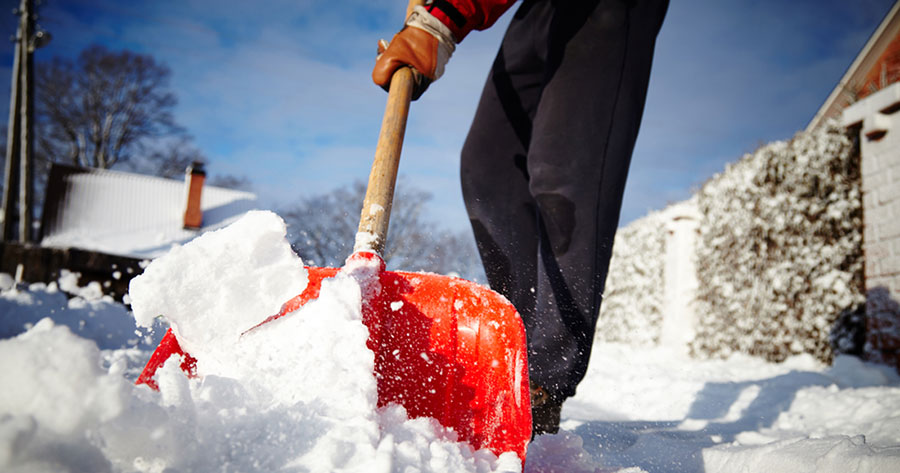
Here are my 10 tips for pain-free shoveling
- Warm up before starting the first shovel load. Do 4-5 minutes of jogging in place, jumping jacks, or quarter squats to gradually increase your heart rate, body temperature, and prepare your muscles, tendons, and ligaments for the upcoming effort. Warming up is especially important if you plan to shovel in the morning;
- Dress in layers. Wear multiple layers to avoid getting cold and choose clothing that allows good breathability;
- Drink plenty of water. I repeat, shoveling requires physical effort, and hydration is key during any physical activity;
- Take small shovel loads;
- Avoid twisting your back; bend your knees to help lift the snow with your legs, not your back;
- Push the snow instead of throwing it over your shoulder;
- Take your time, take regular breaks, and if you are in a hurry, only clear what is essential and come back later to finish;
- Use a shovel that weighs less than 5 lbs and has a curved handle, which will be easier to use; the handle height should reach chest level;
- Don’t hesitate to ask for help if the storm dumped too much snow (helping neighbors, why not!);
- Stop all activity if pain persists, whether it is chest pain or back pain; it is important to consult a healthcare professional to address any discomfort or malaise.
Being active every day pays off, even for seemingly simple activities like shoveling!
Dre Sophie Pesant, Chiropractor PRAXIS Family Health Clinic